Bloom from April through October. Very low water once established. Deer resistance that holds up under real Central Texas yard pressure. These are the five plants I keep expanding into new spots in my yard — and the first ones I recommend to anyone starting a sunny Central Texas bed.
🌸 Perennial
Autumn Sage
Full Sun
Use: Beds, walkways
🔥 Perennial
Flame Acanthus
Full Sun
Use: Hell strips, hot beds
💜 Perennial
Mexican Bush Sage
Full Sun
Use: Back of bed
🐸 Groundcover
Frogfruit
Full/Part Sun
Use: Living mulch, lawn edges
🪨 Groundcover
Woolly Stemodia
Full Sun
Use: Slopes, rocky edges
✓ All five are deer-resistant and heat-tested for Central Texas summers.
You’ll find all five at Barton Springs Nursery or The Natural Gardener. Woolly Stemodia and Frogfruit can be harder to source than the others — call ahead before making the trip.
The three perennials that carry the bed
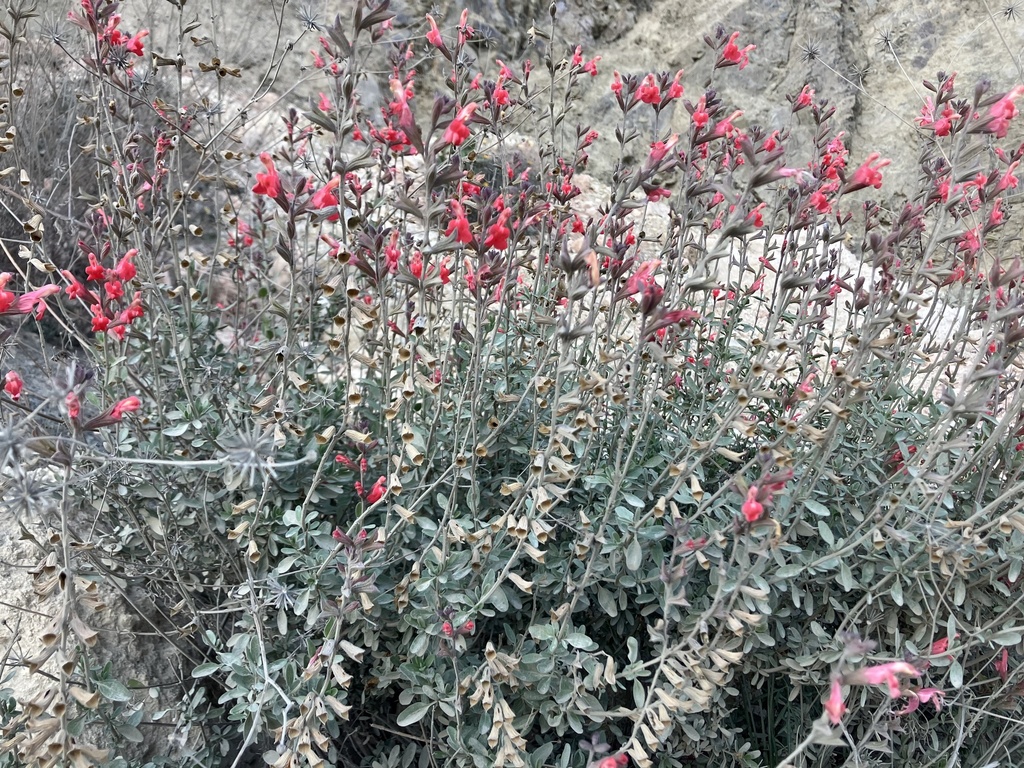
Autumn Sage
Salvia greggii
The compact workhorse for a sunny Central Texas bed. It stays around 2–3 feet tall and wide, brings hummingbirds in from April, and blooms continuously through the brutal July–September stretch when most of the bed looks spent. In most Central Texas yards, expect bloom from April through November.
It doesn’t like wet feet, and it benefits from a trim once or twice through the growing season. Cut it back by 1/3 and watch it rebloom in full. In late January, cut it back to 6 inches to keep it full and well shaped.
Best use: Compact structure, repeat bloom, hummingbirds, any sunny bed with reasonable drainage.
🐦 Hummingbird magnet
💧 Low water
🦌 Deer resistant
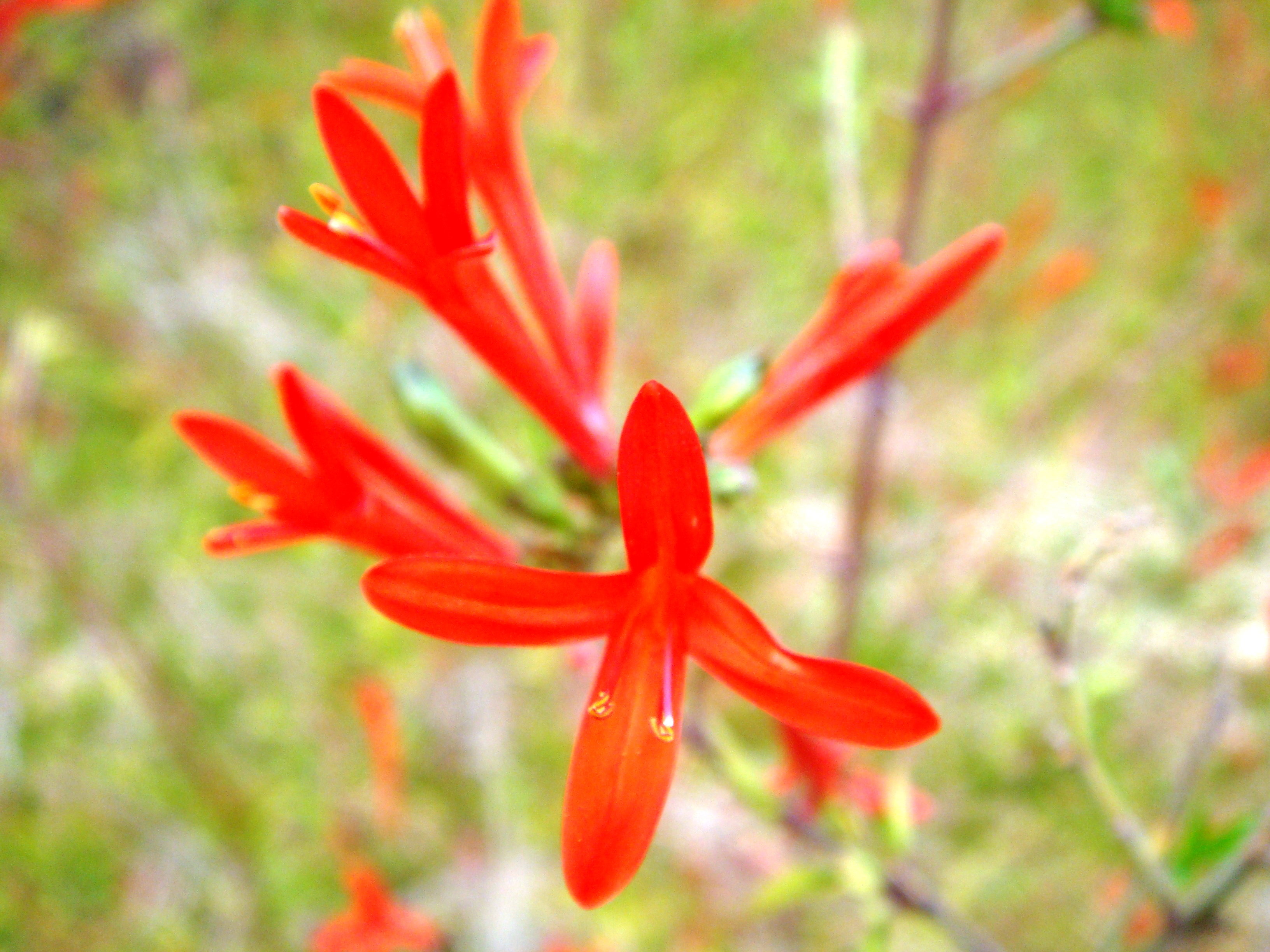
Flame Acanthus
Anisacanthus quadrifidus var. wrightii
The plant for spots where everything else has failed. Dry thin soil, reflected heat from the street or curb, full sun — no problem.
Flame Acanthus can reach 4–5 feet and blooms continuously from late June through October — during the hottest, driest months, when everything else is withering. Hummingbirds find it within days of first bloom and keep coming back as long as it’s open.
Two things to know going in: it can reseed, and it may freeze back in a hard winter, sometimes to the ground. Cut it back and it will rebound in full.
Best use: Hell strips, hot beds, thin soil over limestone or caliche, summer and fall color.
☀️ Heat tolerant
🐦 Hummingbird magnet
🪨 Thin soil ok
Mexican Bush Sage
Salvia leucantha
Not technically a Texas native, but it performs reliably throughout Central Texas. It can bloom throughout the year, but puts on its best show in fall — prolifically, when everything else is slowing down. It’s beloved by bees and butterflies.
It gets larger than most beginners expect — 4 feet or more in most Central Texas beds — and it can handle heavier soil than many salvias. Give it room in the middle or back of the bed.
Cut it back after winter damage in February. It returns reliably from the crown.
Best use: Fall color, the back of a larger bed, yards with heavy deer pressure.
🦋 Pollinator magnet
🍂 Fall bloomer
🌱 Clay tolerant
The two groundcovers that protect the soil
Frogfruit
Phyla nodiflora
The widest soil tolerance on this list. Clay, caliche, limestone, moist spots, dry spots — it handles all of it.
This groundcover fills in between larger plants, acting as living mulch: reducing bare soil, slowing moisture loss, and softening bed edges. Gulf Fritillary and other native butterflies use it as a host plant.
Best use: Living mulch, lawn edges, pollinator groundcover, spots where soil conditions are inconsistent.
Pro Tip Can get 6–12 inches tall and spread quickly. Great for lawn-transition areas where conditions aren't predictable.
Woolly Stemodia
Stemodia lanata
The groundcover for your hottest, driest edges. If you have a bed against a south-facing stone wall, a slope where irrigation never reaches, or reflected heat off concrete, this is where it makes sense.
The silver foliage contrasts well with the darker greens and warm-season colors of the perennials above it.
Best use: Reflected heat, silver foliage contrast, bed edges, slopes, dry sunny ground.
Pro Tip Stays low and spreading. Avoid standing water — it needs excellent drainage. Perfect for south-facing walls or reflected heat off concrete.
How to use these five together
Think in layers. Autumn Sage goes toward the front or middle of a sunny bed. Flame Acanthus earns the hotter, tougher spots — hell strips, limestone slopes, or beds that bake all day. Mexican Bush Sage goes toward the back, where its size makes sense and its October bloom can anchor the whole bed when everything else has quieted down.
Then let Frogfruit and Woolly Stemodia cover the ground between them. Frogfruit is the better choice for clay, moisture swings, and lawn-transition areas. Woolly Stemodia belongs in the driest, hottest edges where the silver foliage shows best.
You don’t need all five in one bed. In a smaller sunny front bed, Autumn Sage plus Frogfruit and Woolly Stemodia may be enough. In a larger deer-prone yard, add Flame Acanthus and Mexican Bush Sage for height and a longer season of interest.
What to expect in year one
The most common question I get after a first August: “My plant looks dead — is this normal?” In most cases, yes. Year one is root development. The plants focus below ground, and what you see above may not look like much — especially in the July–August heat.
Water deeply in the first few weeks after planting, then let the soil guide you rather than a schedule. Once the plants are established — usually by fall of the first year — back off. Overwatering is the most common mistake with Autumn Sage and Woolly Stemodia specifically.
Expect some winter dieback. Flame Acanthus and Mexican Bush Sage may freeze back to the crown in a hard winter; cut them back in February and they return. Frogfruit may go dormant or brown after a hard freeze. Woolly Stemodia may thin out after a rough winter, especially if the soil stayed wet.
If you want a plant recommendation for your specific conditions every month — what to plant now, what’s worth adding this season — the newsletter is the fastest way to stay ahead of the planting windows. Get monthly plant tips →